The Operational Intelligence Layer · Industry 4.0

Industry 4.0 Needs anOperational Intelligence Layer.

Netsocs unifies production, safety, ERP, logistics, quality, IoT, video, and industrial systems into one intelligent ecosystem that can detect, correlate, decide, automate and trace every operational action — across every line, plant, and site.

  • OT · IT · IoTOne convergence layer
  • A.T.O.X.Autonomous workflow engine
  • Plant → C-suiteOne operational truth
● livenetsocs · operational layer
A.T.O.X.
Engine
ERPPLC / SCADAIoT SensorsVideo / VMSSafety / FireLogisticsQualityMaintenance
Today's Industrial Reality

Industrial operations are connected — but not coordinated.

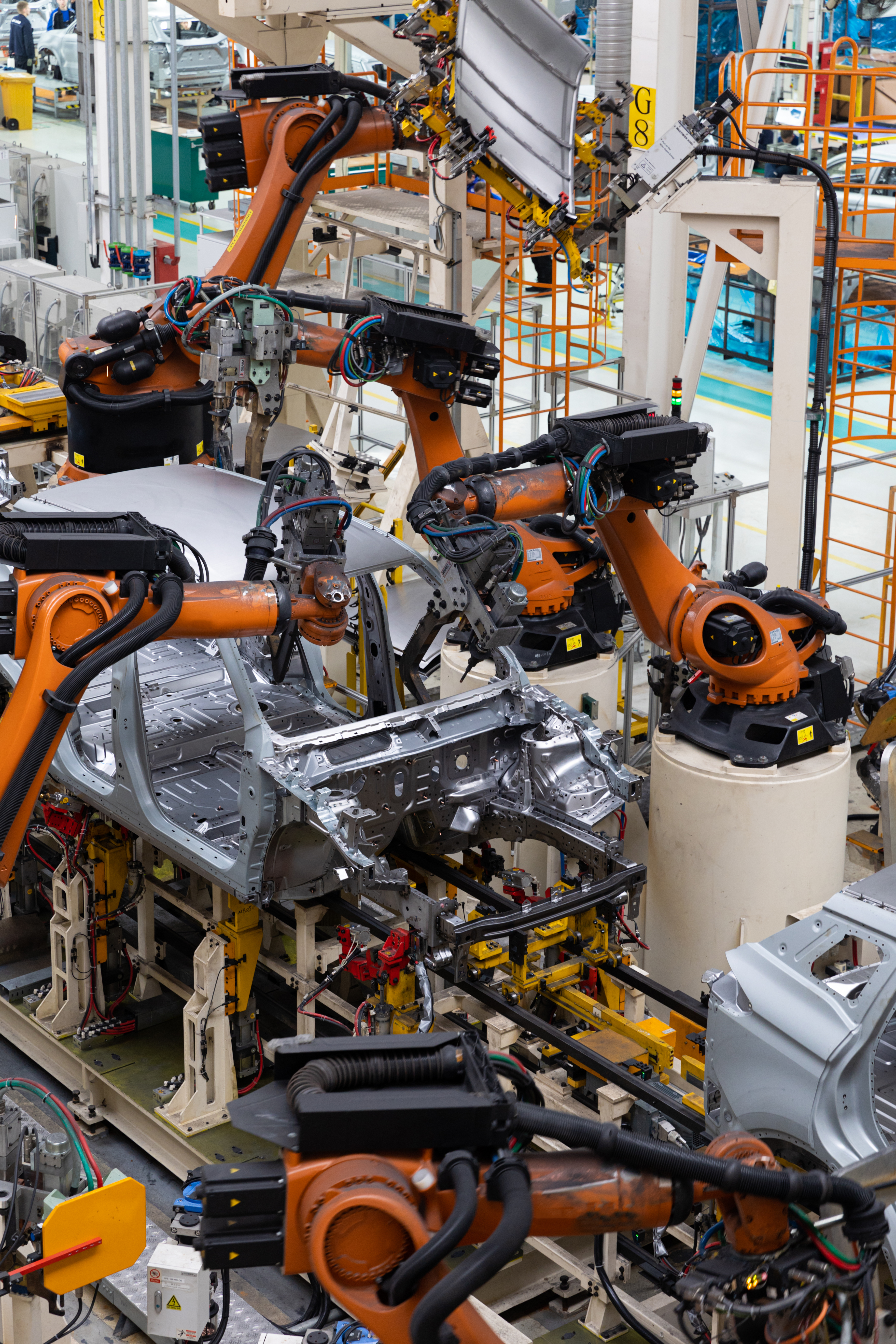
Modern factories run on more systems than ever — ERP, MES, PLC, SCADA, IoT, video, access, quality, maintenance, logistics. Yet the operation itself still breaks down at the seams between them.

Siloed Systems

ERP, PLCs, SCADA, quality, maintenance, video and IoT live in separate stacks that don't talk to each other.

No shared context

Reactive Maintenance

Teams act after the line stops. Machine signals exist, but nothing turns them into action in time.

After downtime

Manual Escalations

Phone, radio, email, paper. Decisions depend on who's available — not on the data the operation already has.

Human-dependent

Disconnected Quality

Quality issues are documented after damage is done — not prevented while there's still time to act on the line.

Lagging signal

Low Visibility

Managers receive reports — not real-time, cross-system context they can act on with confidence.

Reports, not intelligence

Delayed Decisions

By the time the right people see the right data, the window to act has already closed.

Time-to-decision gap

No Unified Traceability

Every system keeps its own log. Reconstructing what really happened is slow, partial, and disputed.

Fragmented audit

AI Without Context

AI cannot deliver real value on top of fragmented data. Without convergence, every model starts blind.
No data foundation

You don't have a sensor problem. You have a coordination problem.

Industry 4.0 doesn't fail at the device layer. It fails at the layer that's supposed to make all the devices act as one operation.

Industry Signal · 2024 – 2025

Why operational intelligence is no longer optional.

Three numbers that reframe the conversation from "more dashboards" to "one operation that thinks as one."

$1.4T

Lost every year to unplanned downtime.

The world's 500 largest industrial companies lose roughly $1.4 trillion annually to unplanned downtime — about 11% of their revenues.

Source · Siemens, The True Cost of Downtime 2024
95%

Can't operationalize AI — because their data isn't integrated.

95% of organizations face challenges integrating AI into existing processes. 80% cite data integration as the single biggest obstacle.

Source · MuleSoft / Salesforce, 2025 Connectivity Benchmark Report
10–20%

Production output gain — when smart manufacturing is real.

Smart manufacturing initiatives are delivering 10–20% improvement in production output, 7–20% gains in employee productivity, and 10–15% unlocked capacity.

Source · Deloitte, 2025 Smart Manufacturing & Operations Survey

The companies that win Industry 4.0 will not be the ones with the most systems. They will be the ones whose systems can act as one.

The Flow

How most industrial operations work today vs. how Netsocs changes the flow.

Same trigger. Same plant. Two completely different operating models.

Traditional Flow

Linear, manual, reactive.

Decisions wait on whoever happens to be available.

  1. 01Machine, sensor or operator alert
  2. 02Manual check on the floor
  3. 03Phone call, radio or email
  4. 04Spreadsheet or ERP update
  5. 05Delayed supervisor decision
  6. 06Maintenance / quality / logistics action
  7. 07Report created later
  8. 08Limited traceability
Where it breaks
  • Human-dependent at every step
  • No automatic correlation across systems
  • No unified operational memory
  • Decisions depend on who's on shift
Netsocs Operational Intelligence Flow

Coordinated, contextual, automated.

The operation thinks before anyone has to react.

  1. 01Signal ingestion across OT, IT, IoT, video
  2. 02Context enrichment (asset, batch, shift, location)
  3. 03Cross-system correlation
  4. 04A.T.O.X. decision logic
  5. 05Automated workflow execution
  6. 06ERP / maintenance / quality / logistics update
  7. 07Human notification when judgment is required
  8. 08Auditable traceability & continuous improvement
What it unlocks
  • Real-time correlation across every system
  • Context-aware, automated response
  • Unified operational history end-to-end
  • Scalable across sites, lines, machines and teams
What Netsocs brings to Industry 4.0

Five capabilities. One operational intelligence layer.

Netsocs is not a new system on top of your stack. It's the layer that makes the stack you already own act as one operation.

01 · Convergence

IT / OT / IoT Convergence

Connect ERP, PLCs, sensors, cameras, alarms, access control, MES, quality systems, maintenance platforms, logistics, APIs and cloud services into a single contextual data fabric.

02 · A.T.O.X.

A.T.O.X. Autonomous Workflow Engine

Build intelligent workflows that detect events, enrich context, decide, escalate, trigger actions, update systems of record — and leave a complete, defensible audit trail.

03 · Dashboards

Real-Time Operational Dashboards

One place for production health, open incidents, machine alerts, quality exceptions, downtime risk, safety events, inventory, SLAs and response time — for plant managers and executives.

04 · Traceability

Traceability & Compliance

Auditable event trails across production, safety, quality, logistics and maintenance — with the context, time-stamp and evidence regulators and customers actually expect.

05 · Predictive

Predictive & Preventive Operations

Move from reactive to predictive. Combine machine signals, sensor data, historical patterns, business rules and automated response flows to act before failure becomes downtime.

Customer Success

FireBot: from connected product to intelligent operational ecosystem.

How Netsocs helps an industrial fire-suppression company scale product, ERP, logistics, quality and operations under one operational intelligence layer.

FFireBot · Industrial Fire Suppression

Netsocs created the digital operational layer around FireBot's product and business.

FireBot commercializes fire-suppression technology designed to detect and suppress high-risk fire events. Netsocs is the operational intelligence layer that connects FireBot's connected product, enterprise workflows, quality checkpoints, logistics activity, and the application experience customers and partners actually use.

"Netsocs connects product data, enterprise workflows, quality checkpoints, logistics activity and future production machinery into one coordinated intelligence layer."
Where Netsocs operates inside FireBot
ERP workflow integration
Logistics process integration
Quality & production workflows
Dedicated application experience
Integration with the systems FireBot commercializes
Foundation for future production machinery integration
Before

Connected product. Disconnected operation.

  • Product, ERP, logistics, quality and operations handled in separate processes.
  • Limited real-time visibility across the product lifecycle.
  • Manual coordination between teams to keep work moving.
  • Difficult to scale operational intelligence as device volume grew.
After · with Netsocs

Connected product, connected business.

  • Product + ERP + logistics + quality + application experience under one layer.
  • Unified operational workflows across functions and partners.
  • Real-time visibility and traceability from product to customer delivery.
  • Scalable foundation for production machinery, lifecycle, service and automation.

Build your industrial intelligence layer with Netsocs.

How It Runs · Three Live Flows

Trigger → context → decision → action → traceability.

Three operational flows from three different industries. Same engine. Same pattern. Different outcome.

01
Food & Beverage · Quality

Cold-storage anomaly meets active orders.

Scenario. A temperature sensor detects that a cold-storage area is moving outside the approved range, while ERP shows active inventory assigned to customer orders.

  1. Trigger · Temperature anomaly detected
  2. Context · Correlate with inventory, batch, location, and order priority
  3. Decide · A.T.O.X. classifies risk level
  4. Act · Notify quality & ops, open maintenance ticket, escalate if unresolved
  5. Trace · Update quality log & ERP status, generate audit trail
Business valuePrevents product loss, protects customer delivery, reinforces compliance, eliminates manual reporting.
02
Automotive · Uptime

Machine signals predict downtime before it happens.

Scenario. A production machine shows vibration anomalies and cycle-time degradation before failure occurs.

  1. Trigger · PLC / sensor signal received
  2. Context · Compare with historical patterns & maintenance status
  3. Decide · A.T.O.X. predicts downtime risk
  4. Act · Auto-create maintenance workflow, notify supervisor, adjust priority
  5. Trace · Track resolution time, downtime avoided, store for continuous improvement
Business valueReduces unplanned downtime, sharpens maintenance planning, protects production output.
03
Industrial Safety · Fire + Access + Video + ERP

One coordinated emergency response.

Scenario. A fire / smoke / suppression event is detected in a restricted production or warehouse area while access control and video confirm nearby personnel.

  1. Trigger · Fire / safety event detected
  2. Context · Correlate with camera, access control, location, shift, asset data
  3. Decide · A.T.O.X. executes the emergency protocol
  4. Act · Notify safety team & plant manager, trigger PA / mobile alerts, open ticket
  5. Trace · Timeline, video snapshot, response actions, closure, exportable report
Business valueFaster safety response, less confusion, clear accountability, full incident traceability.
Where Netsocs Operates

One layer. Twelve operational use cases.

Practical workflows industrial leaders deploy in production, safety, logistics, quality and enterprise operations.

Predictive maintenance
Quality exception management
Production line visibility
Fire & safety automation
ERP-to-shop-floor sync
Logistics & dispatch automation
Energy & environmental monitoring
Machine status monitoring
Digital work instructions
Automated escalation protocols
Video + IoT + access correlation
Multi-site operational command center
For COOs · CTOs · Plant Leadership

From factory data to executive decisions.

Operational intelligence is what turns raw signals into the things leaders actually need: visibility, speed, accountability, resilience.
Plant → Site → Group
01Real-time visibility across plants, lines, sites and partners.
02Faster decisions on production, safety, quality and logistics.
03Fewer manual escalations — automation handles the routine path.
04Better operational accountability with traceable, time-stamped action.
05Reliable compliance evidence across production, safety and quality.
06Higher production resilience — anticipate, don't react.
07A foundation for AI and autonomous operations — finally on real data.

Industry 4.0 is not about connecting more systems. It is about making the entire operation think, react and improve as one ecosystem.

Ready when you are

Build the Operational Intelligence Layer for your industrial ecosystem.

Netsocs helps industrial companies connect systems, automate decisions, reduce operational friction, and scale smarter operations across production, safety, logistics, quality and enterprise workflows.